Saturday, September 5, 2015

The Flower Garden in July

Be forewarned, this is kind of long post. July has become my favorite time of year in the flower garden, so I have a few more photos than usual.

White David Phlox and pink Rosalind Phlox, along with Purple Coneflowers and a few roses make for a pretty view in July from the screened-in back porch.


The Purple Coneflowers have spread through the years to form this very large patch. I’m ok with that because they look lovely in summer and the goldfinches eat the seeds later in the season.


I added this annual Colorblaze Kingswood Torch Coleus in front of the Coneflowers this year and I really like the combination.


Here is the same section of the garden, but a little different view and before the Phlox were in full bloom.


The white David Phlox is a proven reliable performer every year and rarely shows any signs of powdery mildew. The Rosalind Phlox really took off this year and was a nice contrast to the white. Butterflies seem to like the Phlox, especially the white David.


Again, that same section of the garden, but seen from the other side. Here you can see the white daisies that are behind the roses. Unfortunately, the roses often grow so tall now that they hide the daisies unless you take a walk to this side. You also see a yellow annual and a bright, lime green coleus.


The yellow annual is Million Gold Melampodium and the bright, lime green coleus is Colorblaze Lime Time. I have really enjoyed this combination all summer long. I plant Melampodiums every year, but this is the first time I have paired it with this coleus.


A closer view of the Shasta Daisies.


The other half of the flower garden is partially obscured from view when sitting on the back porch due to the dense climbing Hydrangea on the arbor, but you get a sneak peak of some white Hydrangeas and Black Eyed Susans.


The two white Hydrangeas have really grown the past couple of years.


The Black Eyed Susans have been plagued by something the past couple of years which makes the leaves look pretty bad, but they still flower beautifully.


I wish I knew what variety of Hydrangea this was. I inherited this from the previous owner. I really love it.


Here you see a bit of the Raspberry Wine Monarda and more white David Phlox.
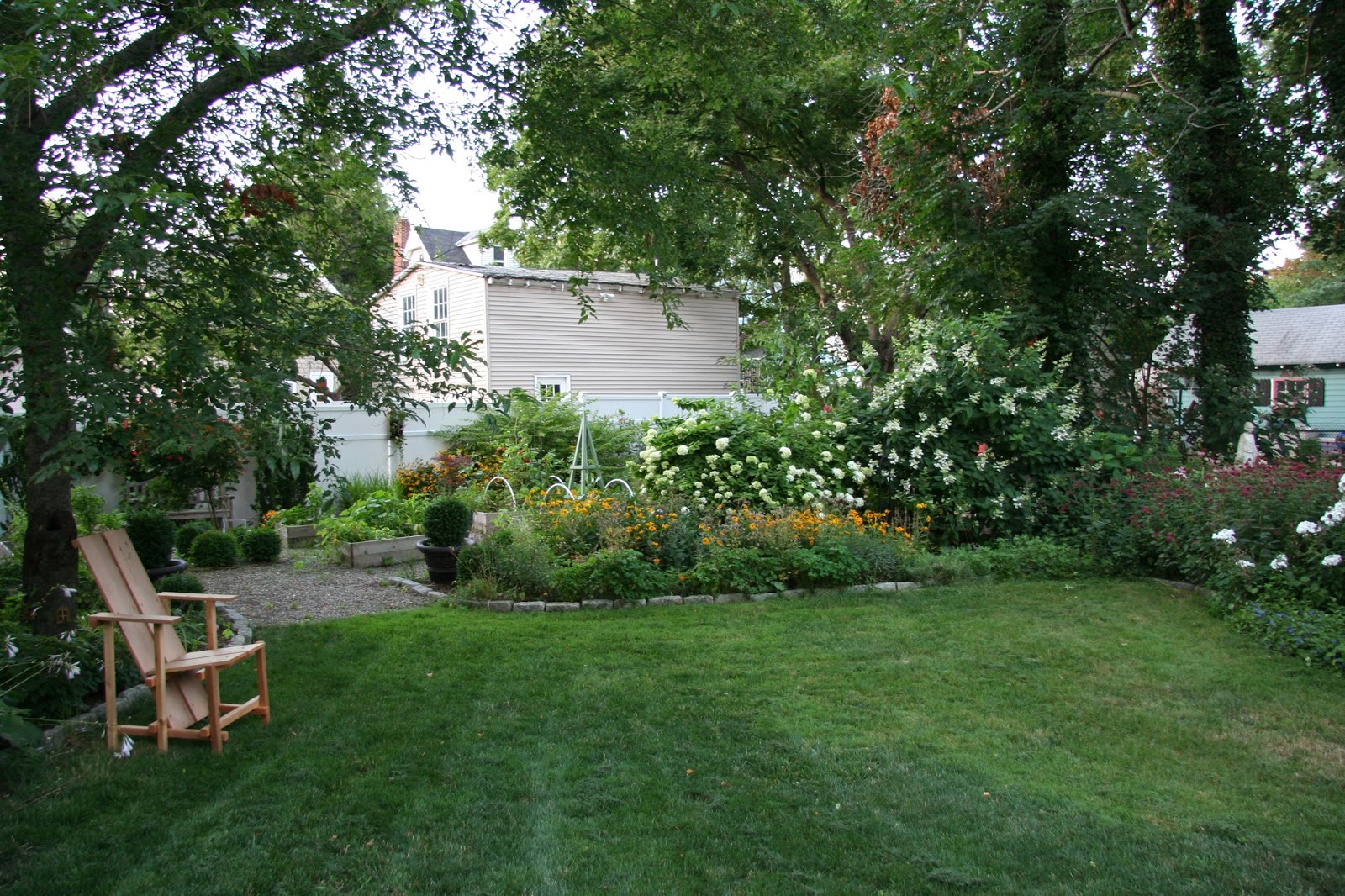

A closer view of the white David Phlox in this part of the flower garden, along with the Purple Coneflowers, Raspberry Wine Monarda, and a blue-flowered ground cover called Plumbago (Ceratostigma Plumbaginoides).


The Raspberry Wine Monarda with the Purple Coneflowers in the background.


I took some photos from the back of the garden this year. It is a perspective that very few people see other than myself and my statue, Winnie.


I am starting to think that I might need a chair or bench back here because I find the view quite lovely.


The gravel path that leads to Winnie goes off to one side and changes to a mulched path with stepping stones that have bees on them. I finished this path just a year or two ago and the stepping stones were a happy find at a local nursery.


The flower garden as seen from the kitchen garden in the back of the yard. This is a favorite spot of mine and there is a garden bench near here that I often sit on while taking a break from weeding.


Another perspective as seen from the kitchen garden, but of the other side of the yard. This side was on overgrown mess just a few years ago.


The shade-loving plants that I planted under the tree have done well, but are mostly spring bloomers. The hostas had actually been buried under the overgrown mess and now are happy to be uncovered.


Back towards the other end of the flower garden, the Cascade Hops were taking over the shed. We ran several lines of string from garden staples in the ground to the top of the shed and they took off like crazy.


The area that I call the secret garden, which is by the greenhouse, has always been a difficult gardening area. There is a Hydrangea here that is finally blooming, after many, many years of waiting. My favorite thing about this section is the moss that grows on the ground. It gets very little sun here and moisture sits without drying out after rains, which makes for great moss conditions.


Speaking of moist conditions, just on the other side of the garden gate from the secret garden is a path where I had several mushrooms growing this July. It is the first time I have seen this many.


The flower garden is a bee haven in July, between the Raspberry Wine Monarda and the Purple Coneflowers. The Monarda is also a hummingbird magnet, but I can’t seem to get a photo of those fast little birds.


I tend to get quite a few Tiger Swallowtail butterflies every year and this year was no exception. Parsley is a host plant for these butterflies and I always plant parsley, so that could be part of the reason.


It has taken about 10 years to get the flower garden to where it is today. It took a lot of hard work, but it is still always a work in progress. My two cats, Molly and Izzy, seem to appreciate the garden just as much as I do. They love looking for birds, butterflies, and the neighbor’s cats.


Wednesday, September 2, 2015

The Kitchen Garden in July

It’s almost comical looking back at the Kitchen Garden in July in comparison to now. It is a kind of wild abandon at this time of the year. In July, however, it looked fairly tame. Come into the garden and take a look...


Things were growing and looking healthy in July. As I mentioned before, I was late getting my seeds and plants planted this year, so it seemed that things were slow to get started. July, however, proved to be a fairly decent time.


Garlic Chives, Sweet Basil, and both curly leafed and flat leafed parsley were to be had in July. I added these to salads and many other dishes. The red flowers in this photo are Gift Zinnia, which I planted from seed. They are from Hudson Valley Seed Library. I love the pop of red in what is mostly a see of green in the Kitchen Garden. The bright pink in the background is a Crape Myrtle.


Below is a close up of one of the Gift Zinnias. My favorite part about zinnias is the center, which looks like this cluster of tiny little flowers. Zinnias remind me of an old neighbor who passed away last year. She was a dear lady and her favorite flowers were zinnias. She lived across the street from us at our old house. I used to help her shovel in winter. She called me her “snow angel” and would leave me little treats throughout the year on the front porch, such as homemade applesauce or fresh blueberries. I kept in touch with her after we moved and then later when she moved, as well. I miss her and think of her when I see these pretty flowers, that are more than meets the eye at first glance.


Not edible, but a new addition to the Kitchen Garden this year was this Japanese Maple in a blue pot, along with some annuals. I was inspired by Margaret Roach’s large potted Japanese Maples that she has in her garden in NY. My pot is not nearly as big and expensive, but it’s a start. I specifically chose flowers to plant in the pot that would attract the hummingbirds. The red flowers of ‘Lady in Red’ Texas Sage bring them visiting several times a day. Sorrel, along with more Sweet Basil and parsley in the background.


I was eating lots of leafy greens in July. The Merlot Lettuce was really tasting good that month. That was another one that I grew from seed from Hudson Valley Seed Library. Other greens I was enjoying were Arugula and Little Gem Lettuce Mix, also from the Seed Library.


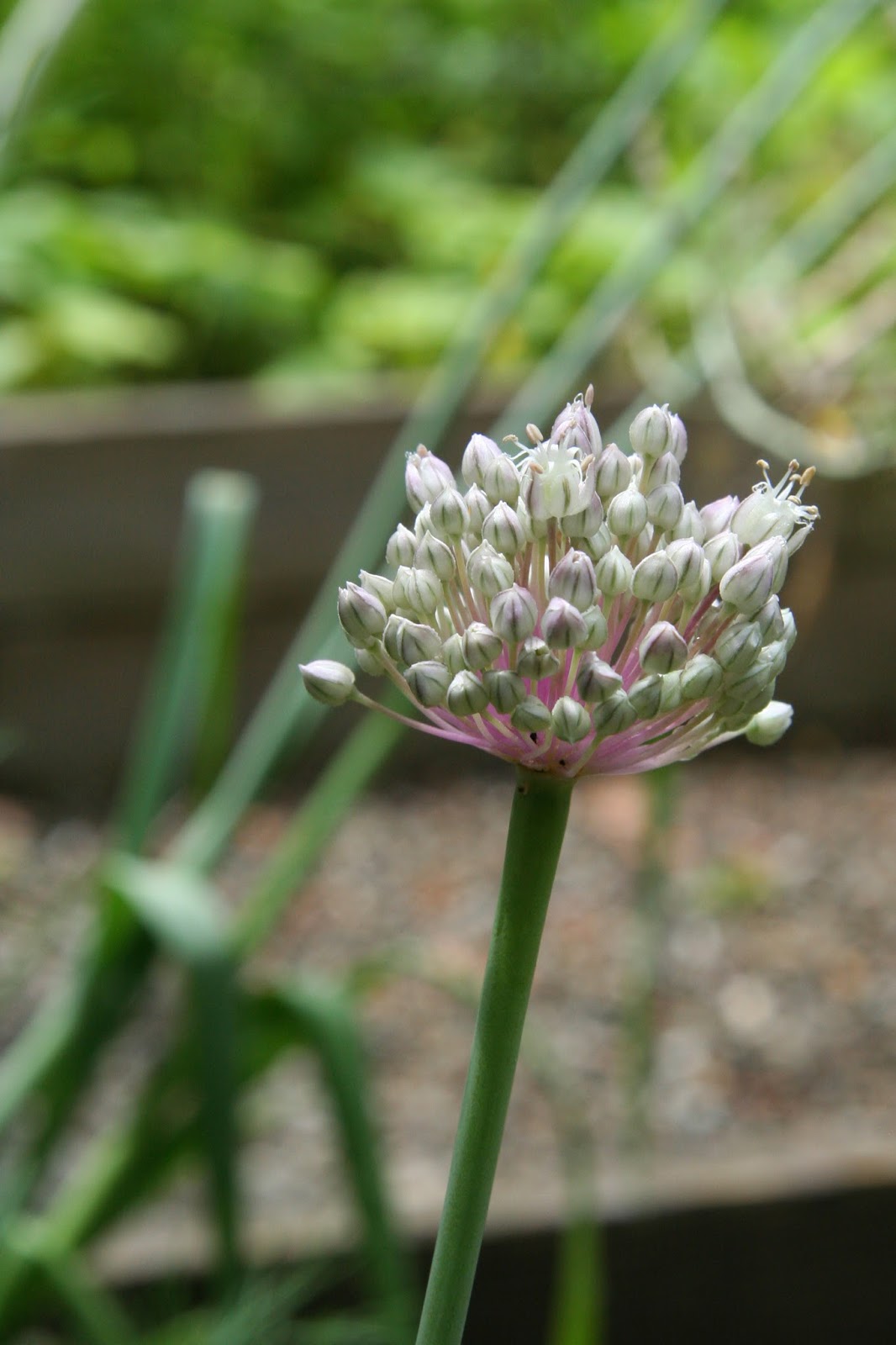
I had some leeks in the same bed, however, I admit they never really fully developed. I did enjoy looking at the interesting flowers and pods, though.


Tomatoes were mainly a bust this year in the raised beds. Actually, they weren’t the only thing I had troubles with. Squashes have been plagued with powdery mildew so much the last couple of years that I didn’t bother planting zucchini or yellow squash this year. Oh and my poor cucumbers. I will get to those, but first, here is what the Indigo Ruby tomatoes looked like before they ripened. This is literally all I got from this plant. Quite sad.


So yes, the cucumbers. They started off like gangbusters, but in late July they were ravished by some sort of disease. This is as big as most of them got and the leaves and stems were a mess...


One squash I did try this year was this Gold Nugget Winter Squash from Seeds of Change. In July it looked so healthy with thick, green foliage and oodles of buds and flowers. Come August, well, it went the way of the cucumbers with only one squash to show for it. So disappointing.


This year was my first try at Brussels Sprouts. These were also grown from seeds from Seeds of Change. They are Nautic F-1 Brussels Sprouts. They are on the right in this photo. Again, nice and healthy looking in July. No disease for this one, however, insects of some sort are eating holes in the leaves. I am holding out hope for some brussels sprouts still. We shall see. The yellow flowers in the background are Heliopsis Summer Nights, a real favorite of mine due to its ability to flower for months on end, even in extreme heat. The red flowers are Gift Zinnias again.


The Alaska Nasturtiums did well again this year. I had planted these seeds last year, as well. This year the leaves didn’t seem as variegated as last year. Lots of pretty flowers, though, and I added several to salads.


The blackberries always start out looking more like raspberries. They never really get fully developed berries, though. Although maybe they do and the birds get to them first.


This Solanum quitoense (Naranjilla) is an unusual fruiting plant that I bought last year and overwintered in my greenhouse. It survived and has been producing fruit like crazy this year. It wasn’t ripe yet in July, but is now starting to turn yellow. The fuzzy leaves with purple thorns and the purple stems are really why I bought this plant. It is probably the coolest plant I own. I love it. Don’t back into it while weeding, though. Those thorns sure do hurt!


The Solanum quitoense lives in another blue pot in the part of the Kitchen Garden that gets a little more shade.


Non-edibles in the Kitchen Garden are classic, old-fashioned Hollyhock and Cinderella Milkweed. See my last post for more about the milkweed.


July was better than August for the Kitchen Garden this year, so don’t get too excited about what you’ll see when I post those photos. Remember what I said? Wild abandon. And not much produce to show for it. I have decided that I need to do a soil test of the raised beds and amend accordingly. I add compost every year, but clearly something is going wrong. The beds are four years old now, so they probably are overdue for some amending.